The first video made everyone furious. A man striking a young woman with an object in the middle of a Louisville road, swinging her around as she fought back — with her 1-year-old daughter sitting in the backseat of the car. It racked up hundreds of thousands of views, drew demands for an arrest from two city councilwomen, and looked like an open-and-shut case of a violent attacker.
Then Louisville Metro Police released the rest of the footage. And the story flipped.
https://www.facebook.com/reel/1077113581911888/
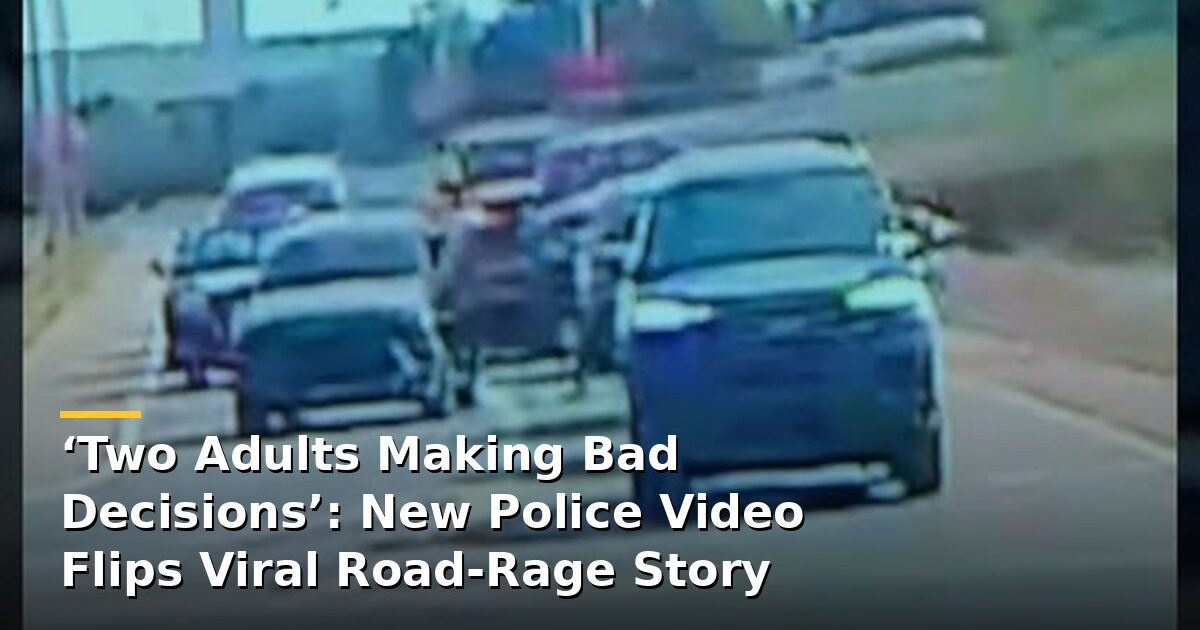
At an October 5 news conference, LMPD Chief Paul Humphrey walked reporters through surveillance video captured from across the street — footage that, in his words, shows “two adults making a series of bad decisions.” The new video starts before the viral clip, and what it shows undercuts the narrative that swept social media.
According to Humphrey, the September 30 incident began around 5 p.m. near Interstate 65 and Preston Highway. The additional footage shows Tenaya Stanford, driving a black sedan, pulling up next to the motorcyclist on an exit ramp. “It is clearly not their first interaction, but a continuation of the earlier encounter,” Humphrey said.
The motorcyclist, Humphrey said, “proactively” got off his bike and approached the sedan once it stopped. He appeared to make contact with the vehicle before stepping back. Stanford opened her car door; the man started to approach again, and she closed it. He walked away — and then, Humphrey said, Stanford exited the car carrying a steering-wheel lock.
“This is when the fight occurs that you saw on the social media video,” the chief said.
But the new footage keeps going past where the viral clip ended. Toward the end of the fight, the man pushed Stanford into the driver’s seat and closed the door, then got back on his motorcycle. Stanford, according to Humphrey, exited her car again and attempted to use a Taser on him — though the device failed. The man started riding forward to make a left turn; Stanford got into her car, pulled up behind him, and bumped into the rear of his bike. He got off the motorcycle and approached the car once more, and Stanford drove off, later meeting officers in a nearby parking lot.
“You see two people making really poor decisions and neither one of them making a single good decision,” Humphrey said. “There were about a dozen decision points in this incident where either one of them could have walked away.”
The fallout has been almost as dramatic as the footage. At an October 2 news conference — before police released the new video — Councilwomen Tammy Hawkins and Betsy Ruhe publicly demanded LMPD arrest the motorcyclist, with Stanford and her mother standing behind them. Hawkins went further, publicly sharing the name and photo of a man she identified as being involved. Police later indicated the wrong man had been named. Hawkins apologized on October 6; Ruhe issued her own apology on October 7, saying she “sincerely” apologized for “overreacting.”
That false identification is where this story gets expensive. Publicly naming an innocent person as a violent attacker — from behind a council podium, no less — is the kind of act defamation attorneys describe as a worst-case scenario. Kentucky defamation law, like most states’, treats false accusations of criminal conduct as defamation per se, meaning the misidentified man may not need to prove specific damages to bring a claim. If he lost work, faced threats, or suffered reputational harm, those damages stack on top. A single viral misidentification can turn into a six-figure lawsuit, and elected officials do not enjoy blanket immunity for statements made outside formal legislative proceedings.
The underlying case is still live. LMPD says the initial report classified the offense as harassment with physical contact — a Class B misdemeanor — and that the victim reported no injuries at the time. The case was passed to a detective, and the Jefferson County Attorney’s Office is now reviewing it for possible charges. Given the new footage, both participants could conceivably face charges: assault, wanton endangerment (with a toddler in the backseat, that exposure is real), criminal mischief for the vehicle contact. Each charge carries potential fines, court costs, and the kind of legal bills that turn a five-minute roadside fight into a five-figure problem.
There’s a broader lesson in the wreckage, and it’s about the economics of viral justice. The original clip generated outrage at industrial scale — hundreds of thousands of views, elected officials holding press conferences, a prominent civil rights attorney posting angrily on social media. All of it was built on a partial video. The full footage doesn’t exonerate anyone — Humphrey was clear that neither party made a single good decision — but it transformed a simple villain-victim story into something messier and more honest.
For the misidentified man, the cost of that partial video may be counted in lawyers’ fees. For the councilwomen, in public apologies and political damage. For Stanford and the motorcyclist, potentially in criminal court. And for everyone who shared the original clip with absolute certainty about what happened — the price was free, which is exactly why it keeps happening.
The county attorney’s review will decide what, if anything, gets charged. Until then, the Louisville road-rage saga stands as the year’s clearest example of why the first video is never the whole video — and why the rush to judgment is the most expensive habit on the internet.