‘$120 for a Can of Spam’: Reporter’s Undercover Video Alleges EBT-for-Cash Scheme in Seattle
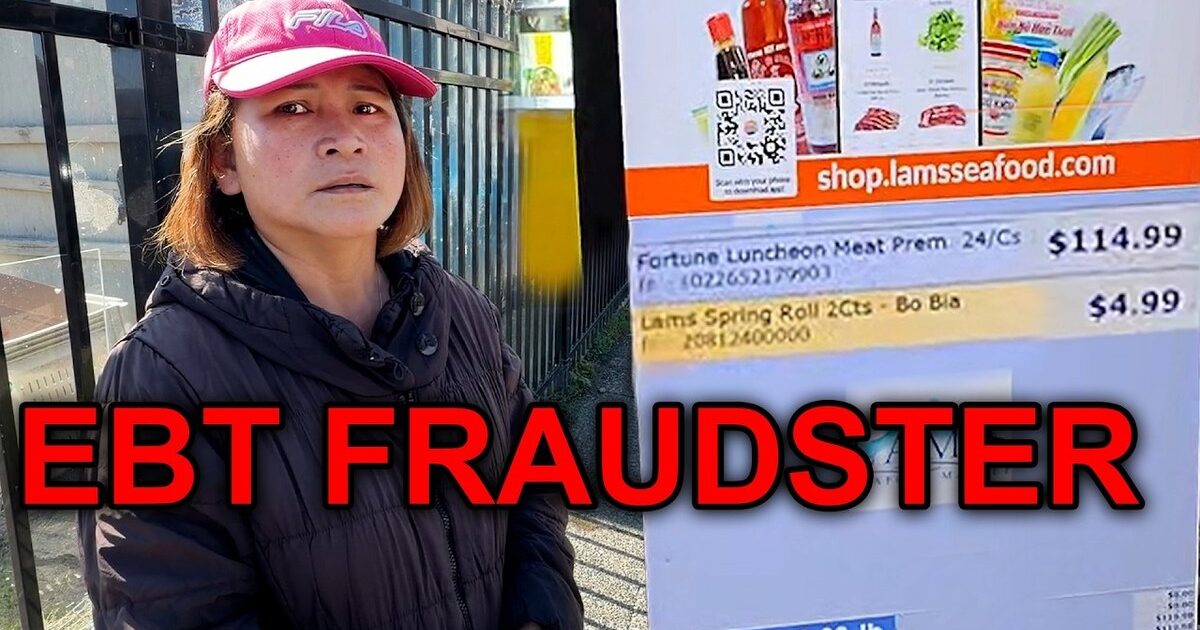
Independent reporter Nick Shirley went to Seattle with a hidden camera and came back with the week’s most combustible clip: a man allegedly offering to sell his $306 EBT card for $120 cash, and a seafood-market register allegedly ringing up a can of Spam and a pack of sushi for exactly $120. It ends with a security guard’s gun disappearing into a street crowd.
The video, posted October 7 under the title “Inside the Food Stamp Fraud Scheme Stealing Billions,” spread fast across YouTube and X — and the reactions split hard. Supporters called it long-overdue sunlight on benefit fraud. Critics said an unverified sting proves nothing at all. And just about everybody had questions about the missing gun.
Shirley is no stranger to this kind of heat. He’s an independent reporter whose undercover fraud investigations have drawn national attention — he testified before the Senate Homeland Security Committee in July about taxpayer-program fraud, and Rep. Eli Crane (R-Ariz.) later introduced a bill to award him a Congressional Gold Medal over his viral Minnesota daycare video. For this one, he says he teamed with citizen journalists Jonathan Choe, Grant and Darren Stallcup, and went in wearing a Seahawks beanie and a face covering.
The sting, beat by beat
The clip attached above opens with Shirley posing as a buyer. “How much would you sell me your food stamp card for if I offered you cash?” he asks one man, who says his card holds $306 — and offers to sell it for $120. The going rate, Shirley suggests, is pennies on the dollar.
Then comes the sequence that made the footage go viral. A middle-aged Vietnamese woman volunteers to set up a transaction, loads Shirley and a crew member into the back of her minivan, and drives them to a Seattle seafood market. Inside, she grabs a can of Spam and a package of sushi and heads for the register. The total, Shirley says: $120 — matching the card’s stated balance. He says he had the card declined on purpose so he wouldn’t commit fraud himself; whether that register total was an inflated markup meant to convert benefits into cash is his allegation, not an established fact.
Outside, Shirley drops the undercover act. “You’re committing fraud. Food stamp fraud. It’s against the law,” he tells the woman. “I know, yeah,” she replies, per the footage. And in the middle of the confrontation, a shopper recognizes Shirley, says she’s a fan, and asks for a photo. “Mid fraud bust,” he jokes, before turning back to the Spam.
Then the day goes sideways. Shirley goes back inside to confront the staff about a $120 can of Spam — and outside, a fight breaks out between one of his security guards and a man on the sidewalk. During the struggle, the guard’s firearm falls into the crowd and vanishes. The crew, outnumbered and missing a gun, flees the area.
The part that has to be said
The footage is real and widely circulating. The fraud claims in it are not proven.
None of what Shirley alleges has been independently verified by law enforcement. Nobody in the video has been charged with anything, let alone convicted. An undercover video — even a dramatic one — is not an investigation, and it is not evidence tested in court. Everything described above is Shirley’s account of what he says he filmed.
How viewers reacted
Supporters treated the clip as citizen journalism doing the job officials won’t. Many said the $120 register total was the clearest visual of benefit trafficking they’d ever seen. Others framed the whole enterprise as a public service — sunlight on a system they believe is easy to game.
Not every reaction was fully on board, though.
Critics argued that baiting people into on-camera transactions proves nothing legally, no matter how damning it looks. Others questioned the ethics of the sting itself — and a loud contingent zeroed in on the street fight, asking what exactly an armed confrontation was doing in the middle of a YouTube video. The gun going missing, they said, turned a fraud exposé into a safety problem.
What the law actually says
The scheme Shirley alleges — swapping food benefits for cash at a fraction of their value — is known as SNAP trafficking, and it’s one of the most heavily penalized forms of benefit fraud in federal law. Under 7 U.S.C. § 2024(b), knowingly misusing benefits worth $5,000 or more can bring up to 20 years in prison and $250,000 in fines; $100 to $5,000 can mean up to five years and $10,000 on a first conviction; under $100 is a misdemeanor. Courts can also add program disqualification — temporary for a first offense, and permanent for trafficking of $500 or more.
Stores face their own punishment: the USDA’s Food and Nutrition Service can suspend or permanently disqualify a retailer from accepting SNAP — a death sentence for a small market — and refer cases for criminal prosecution.
How real fraud investigations work
Actual SNAP cases don’t start with a YouTube upload. According to the USDA’s Office of Inspector General, investigations begin with referrals — hotline tips, transaction-data analysis — followed by coordination with the local U.S. Attorney’s office to establish probable cause. Then come search warrants, evidence, arrests. If prosecutors decline, the case can still be kicked back for administrative action like retailer disqualification. States handle recipient-side fraud; the USDA and its Inspector General lead on retailer trafficking.
September gave a sense of the scale: Republican Report covered “Operation SNAP Back,” in which hundreds of undercover visits across New York City led to enforcement actions against 170 SNAP retailers — from temporary removal to permanent disqualification and criminal referrals. That’s the machinery that would have to engage for any allegation like Shirley’s to become a case.
As of this writing, no charges have been reported in connection with the Seattle footage.