‘Imagine Running for Senate…’: Ossoff’s Neo-Nazi Attack on Collins Sparks Fierce Debate
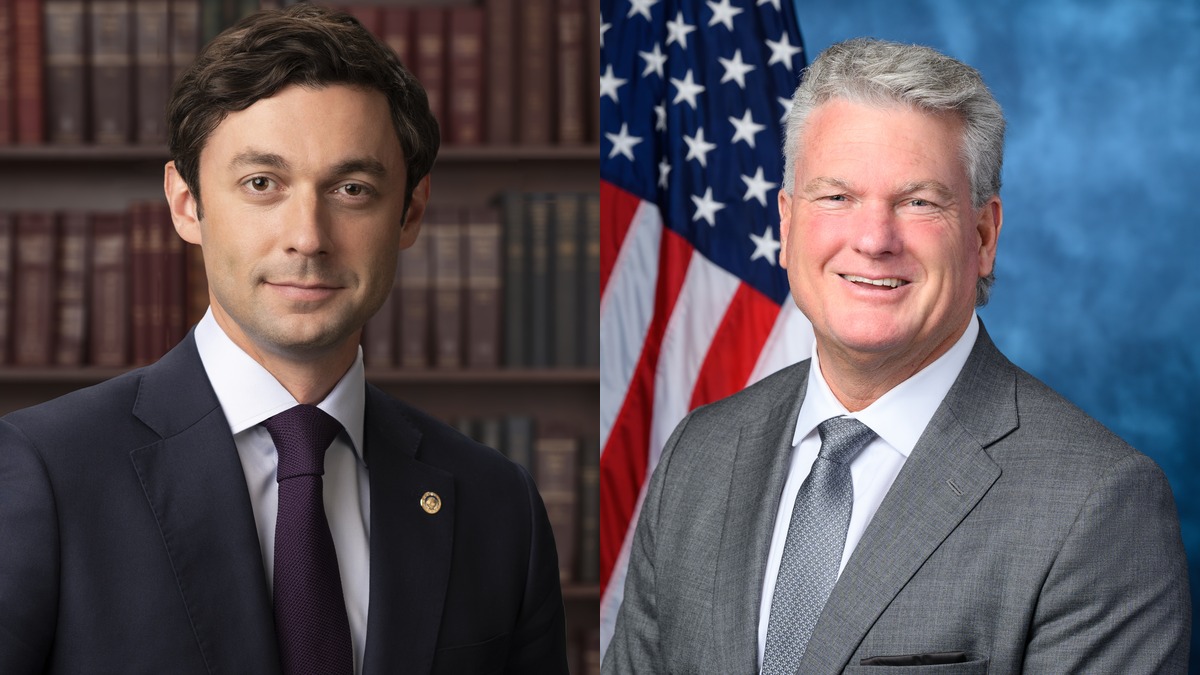
“Imagine running for Senate while neo-Nazi propaganda is disseminated to an audience of millions from your home. That’s Mike Collins.”
https://www.facebook.com/AJCGaPolitics/posts/pfbid02fU8zTaXuZuRFcxWcEHo9TB2TayjxpAmuioZ1ADGd17RSUtCJR26d2bGgaRiW9uPjl
That’s how Georgia’s Senate debate detonated on Thursday night. Democratic Senator Jon Ossoff didn’t ease into his attack on Republican Rep. Mike Collins — he opened with both barrels, accusing his opponent of staffing his congressional office with extremists, promoting neo-Nazi content online, and hiding behind family ties when pressed on it.
Collins, for his part, didn’t flinch on camera. “That’s my family,” he said when a moderator asked about his son-in-law’s reported prominence in the white supremacist movement — before insisting he opposes bigotry in all its forms.
The exchange, from the October 9 debate in one of the country’s most-watched Senate races, ricocheted across social media within hours. An Atlanta Journal-Constitution graphic reading “OSSOFF CONFRONTS COLLINS OVER SON-IN-LAW’S NEO-NAZI POSTS” spread fast on Facebook, and the comment sections split exactly the way you’d expect: Ossoff’s supporters called it a long-overdue reckoning; Collins’ backers called it a smear.
Here’s what actually happened on that stage — and why both sides walked away claiming victory.
The Moment the Debate Turned
Ossoff came out swinging early. According to debate coverage, he told Collins directly: “It’s not just that you’ve hired half the Third Reich to staff your congressional office and that you’ve promoted Neo-Nazi content online. It’s that you’re robbing your constituents to subsidize your donors.”
It was a two-part punch by design — the extremism allegation to wound, the corruption allegation to stick. Ossoff has built his reputation on an assertive debating style, and Thursday was no exception.
The confrontation sharpened when the moderator turned to Collins with the family question. The allegation, as reported from the debate: Collins’ son-in-law is a prominent figure in the white supremacist movement. Collins’ answer was brief — “That’s my family” — followed by the claim that he opposes bigotry and would dismiss any employee who expressed such views at work.
Ossoff wasn’t done. He invoked the legacy of the late Congressman John Lewis, the Georgia civil rights icon, suggesting that Lewis would have seen Collins as an adversary of everything he fought for — reportedly saying Collins would have been “grabbing a billy club” had he been around in Lewis’s era.
“If you are not actively combating this, you are complicit,” Ossoff said, framing the race as a referendum on whether extremism has a place in Georgia politics.
Collins Fires Back — and the Internet Picks Sides
Collins didn’t just absorb the blows. According to the debate coverage, he tried to turn the tables by raising Ossoff’s own associations — pointing to Michigan Senate candidate Abdul El-Sayed and left-wing Twitch streamer Hasan Piker as controversial figures in the Democrat’s orbit.
The deflection didn’t land the way his camp hoped, at least judging by the immediate online reaction. But Collins’ supporters saw it differently. In comment threads under the viral debate clips, his backers argued the neo-Nazi framing was guilt by association — that a son-in-law’s views aren’t a candidate’s platform, and that Ossoff was reaching because he’s losing on the issues.
Ossoff’s supporters, meanwhile, treated the “That’s my family” line as a dodge. Their argument: when someone in your household is allegedly broadcasting extremist propaganda to millions, “that’s my family” isn’t an answer — it’s an evasion. Several viral posts framed it as the debate’s defining moment.
Political analysts watching the race noted the calculation behind Ossoff’s aggression. Tying an opponent to extremism isn’t just about winning a news cycle — it’s about energizing voters who might otherwise stay home. With the midterms approaching, the strategy is to make the contrast as stark as possible.
For Collins, the challenge is the opposite: distance himself from the fringes without alienating the pro-Trump base that helped him win the primary. It’s a tightrope every Republican in a competitive race is walking right now, and Thursday showed just how wobbly it can get under stage lights.
Neither candidate is likely to back down from here. Ossoff has signaled he’ll keep pressing the accountability line through Election Day. Collins will keep calling it a smear and pointing at the issues — the economy, the border, the cost of living in Georgia.
The debate didn’t settle who’s right. But it made one thing clear: in Georgia’s Senate race, the gloves are off, and they’re staying off.

Shannon Allen
Shannon Allen writes features and player profiles for Chiefs Blitz, telling the human stories behind the helmets. Her in-depth pieces go far beyond the box score.