Four hours. Vomiting every ten minutes. No doctor, no treatment, not even an ice pack.
That’s what Autumn Daniels got for her April morning at the emergency room of Carle Foundation Hospital in Urbana, Illinois. What she got in the mail a few weeks later was a bill for $410 — for an “Emergency Room Level 1” visit she never actually had.
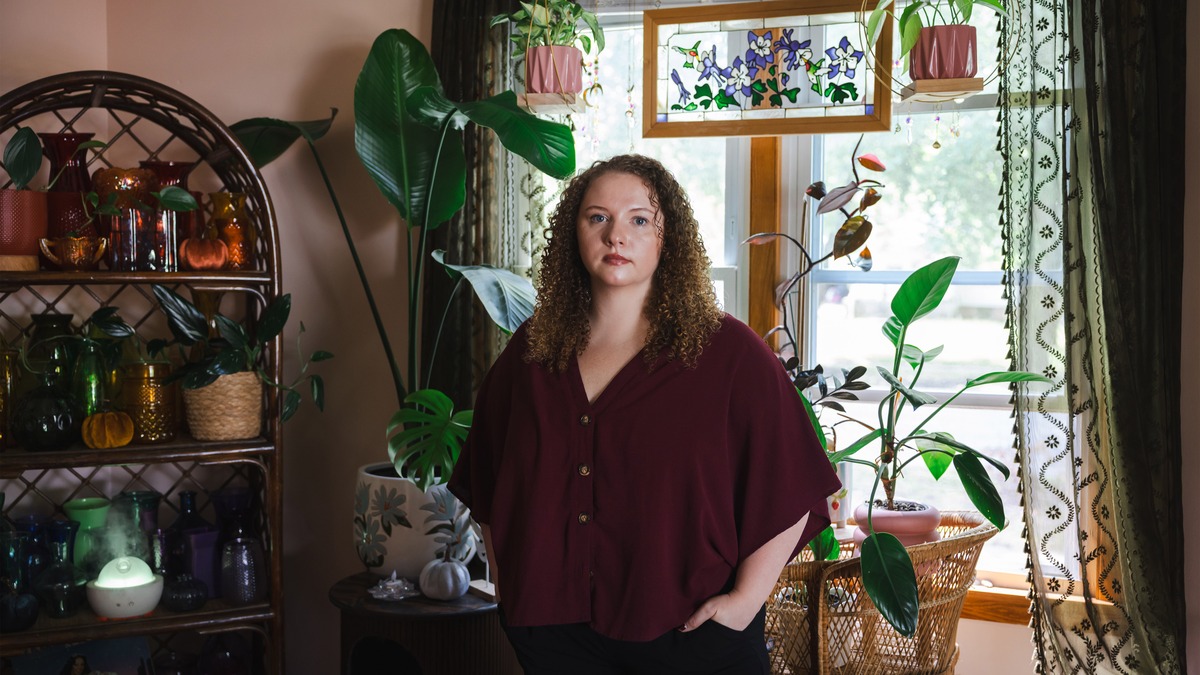
Daniels, 32, of Champaign, Illinois, has suffered from migraines since childhood. The one that sent her to the ER that morning was worse than usual — a week of piercing head pain that an urgent-care Toradol injection hadn’t touched. Her sister drove her to Carle. The ER didn’t look busy. She registered at the front desk, got taken briefly to an exam room where a staffer checked her vitals and asked if she got migraines often, and then was told to sit in the waiting room until called.
She waited. And waited. Her sister asked for an ice pack for her head; the staff wouldn’t provide one, Daniels said. After four hours with no sign she’d be seen, her sister took her to a different hospital. There, after about an hour and a half, she was finally treated — more Toradol, anti-nausea medication, done.
She assumed the Carle visit was over. It wasn’t. The bill came: $410.
The $410 Question: What Exactly Was She Paying For?
Daniels said she asked for an itemized bill showing how the hospital arrived at $410. She never got one. What she did get, eventually, was an email from a Carle representative explaining the hospital’s position — and it’s the part of this story that should make every American sit up.
“Effective March 1, 2026, Emergency Department visits may result in charges even if you are not seen directly by a provider,” the email said. “When you arrive at the Emergency Department, your visit begins as soon as care is initiated.”
And what counts as “care”? According to the email: registration and a nursing assessment. The vitals check. The questions. That’s it. That’s the $410.
The hospital’s argument, in essence: keeping the lights on, the staff paid, and the equipment ready costs money whether or not a doctor ever walks into your room. Carle Health declined to discuss Daniels’ specific bill with KFF Health News, even after Daniels signed a privacy waiver authorizing them to do so. A spokesperson, Brittany Simon, said only that “our Emergency Department has consistent billing practices for triage care” and that the hospital “supports transparency in our billing processes.”
But here’s where it gets uncomfortable for the hospital. The bill listed a single charge under CPT code 99281 — the code for the lowest level of emergency evaluation and management services. According to the American Medical Association’s own CPT guide, “triage alone is not an E/M service; therefore, it cannot be reported with an E/M code.” An AMA spokesperson, Robert Mills, told KFF Health News the physician charge under that code “would generally be significantly less than $410,” suggesting the hospital likely folded a facility fee into the total.
Daniels’ health plan — through her job as an Illinois state employee — paid for her treatment at the second hospital. But it denied the Carle claim entirely. Why? “Under the terms of her health plan, claims associated with a patient leaving the facility against medical advice are not eligible for coverage,” said Leslie Porras, a spokesperson for HealthLink, which administers the plan.
Read that again. She left because after four hours of vomiting, nobody would see her. The plan calls that “against medical advice.” The hospital calls the waiting room “care.” She’s the one holding the $410.
This Wasn’t Even the First Time — But Last Time Was Free
Here’s the detail that turns this from a billing dispute into something stranger. In 2025, Daniels went to the same emergency room with gastrointestinal problems. Same scenario: waited hours, left, went elsewhere. That time, her mother — who was with her — confirmed with the front desk before leaving that Daniels wouldn’t be charged.
And she wasn’t.
“So when I went in for this visit in April, I had no idea I was going to be charged, because it was a very similar set of circumstances,” Daniels said.
Something changed between then and now — the March 1, 2026 policy. The health system didn’t respond to questions about why it changed the policy. And Daniels isn’t the only one caught by it: KFF Health News has heard from other Carle patients with the same complaint, including a 2023 case where a mother was billed $445 after taking her toddler to a different Carle Health ER for a nasal swab and leaving before treatment.
Daniels has paid $25 of the $410 so far and applied for financial assistance. Her plan says she can appeal the denial. She’s considering it. But her real question hangs over the whole American ER system:
“How is it ethical or even legal for a hospital to essentially bill for occupying a waiting room?”
Carle says the charges are “accurate and fully supported by the medical record documentation.” The AMA’s own coding guide suggests triage alone can’t be billed the way it was billed. Somewhere between those two statements is $410 — and a woman who never saw a doctor.