UChicago Students Marched on the CME With a Giant Inflatable Onion to Demand Onion Futures Be Legal Again: “58, Out of Date, Let Our Onions Speculate!”
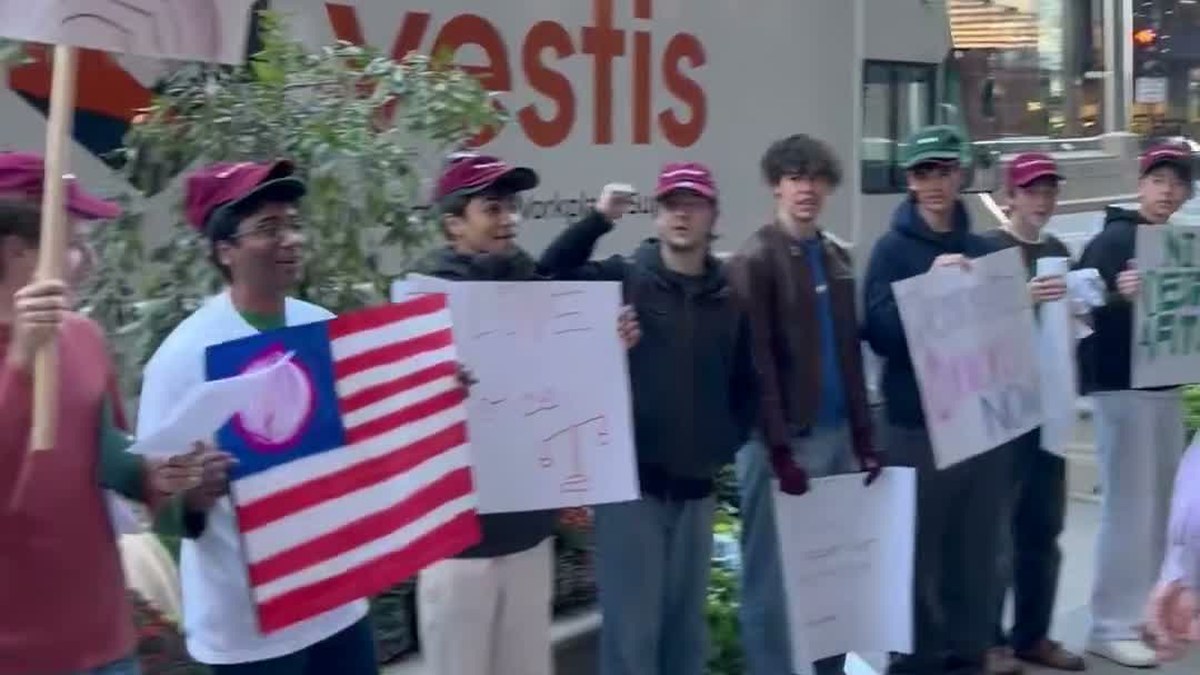
A giant inflatable onion bobbed over the sidewalk outside the CME Building in downtown Chicago on Monday, beside an American flag redesigned with an onion and a student in a giant red onion costume. Dozens of University of Chicago students chanted: “58, out of date, let our onions speculate!”
The demonstrators were members of For Our Futures, a University of Chicago student advocacy group, downtown to enlist CME Group’s support for repealing the Onion Futures Act of 1958, according to MarketWatch. Their signs read “Free the Onion” and “I Love Justice.”
Founder Adam Ash, a third-year economics student, told MarketWatch: “We want to show that a small group can in fact get a bad law changed.” He added, “I can’t imagine how anybody would be opposed to this.” Ash argues that without a futures market, onion prices are probably higher than they would otherwise be.
The group formed in April. According to the Chicago Maroon, its April 17 quad event handed out about 100 raw onions and collected 131 petition signatures; a May 1 rally at Northwestern added 99 more. CFTC Chair Michael Selig commented publicly on Monday: “the fight for onion futures continues today in Chicago.”
“Up up with speculation, down down with regulation” pic.twitter.com/yC8sdzOHcv
— For Our Futures (@foronionfutures) October 19, 2026
Why Onions, of All Things?
The Onion Futures Act of 1958 (Pub. L. 85-839, 7 U.S.C. § 13-1), signed by President Dwight D. Eisenhower that August and sponsored by then-Congressman Gerald Ford, bans futures contracts on onions on any U.S. board of trade. Onions remain the only agricultural commodity with such a statutory ban, according to the CFTC’s own history.
The ban followed a 1955 corner. Traders Sam Siegel and Vincent Kosuga controlled roughly 98% of the onions in Chicago, about 30 million pounds, then went short and flooded the market. A 50-pound bag fell from $2.75 in August 1955 to 10 cents by March 1956, worth less than the bag itself, and ruined farmers petitioned Congress.
The students argue the ban never fixed volatility: onion prices doubled in 2008, then fell 25% in 2009, and farmers are denied the hedging tools every other commodity’s producers have. The other side is just as plain: the ban answered manipulation that bankrupted farmers, and onions’ perishability and concentrated, seasonal supply made the market uniquely easy to rig.
For now, there is no active repeal bill in Congress. MarketWatch got no immediate answer from the White House on supporting one, and CME Group did not respond to a request for comment. This is a student campaign, not legislation.
Some viewers saw a joke protest in a vegetable costume, others a real point about a 68-year-old law.
Viewers couldn’t agree which one it was.

Andrew Walsh
Andrew Walsh is a senior writer for Chiefs Blitz, specializing in film breakdown and game analysis. A lifelong member of Chiefs Kingdom, he breaks down the X's and O's with a coach's eye and a fan's passion.