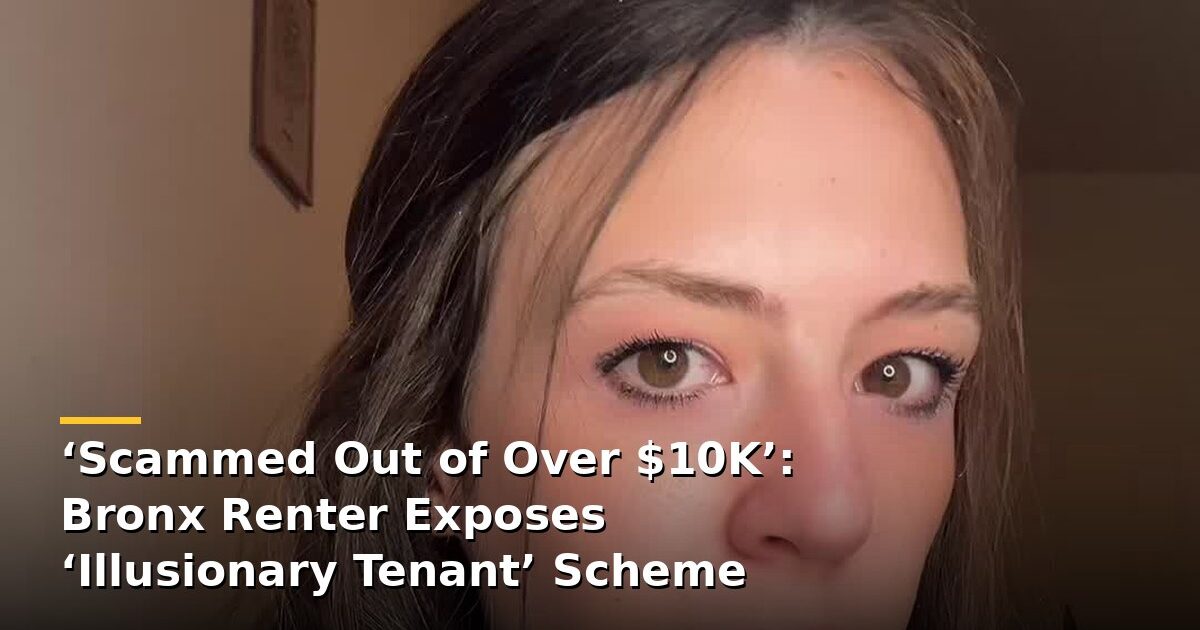
She paid her rent every single month. Then she looked at the paperwork and found a stranger’s name where hers should have been. A Bronx renter’s TikTok is exploding right now after she broke down what she calls an “illusionary tenant” scam — a scheme she says quietly siphoned more than $10,000 out of her pocket over three years.
The video, posted by TikToker @court0o0 in early October, opens with a warning for every renter in New York City: stop and listen, because this could be happening to you. In it, she explains that she discovered someone she had never met was listed as the legal tenant of her own rent-stabilized apartment — while she was the one actually living there and paying the bills.
https://www.tiktok.com/@court0o0/video/7690721173683866911
How the alleged scheme worked
According to her account, the setup was deceptively simple. Her apartment is rent-stabilized, which means the legal rent is registered with the state and can only rise by amounts approved each year. But the rent she was actually paying, she says, was about $200 a month higher than the legal rent on file — every month, for roughly three years.
Do the math on that: $200 times 36 months is $7,200 in overpayments. She puts her total losses at “over $10k,” suggesting the damage goes beyond the monthly gap — possibly including fees, or months where the gap was wider. ChiefsBlitz has not independently verified her figures; they are her claims, laid out in the video.
The “illusionary tenant” label, as she describes it, refers to the phantom name on the lease: a person who appears on paper as the tenant of record but doesn’t actually live in the unit. In a rent-stabilized system, the tenant of record matters enormously — that name is tied to the registered rent, succession rights, and the paper trail regulators use to spot overcharges. If the name on file isn’t the person paying, the numbers can drift without tripping alarms.
Why rent stabilization makes this a five-figure fight
Here’s where the money angle turns serious. New York’s rent stabilization system isn’t just a cap on increases — it comes with an enforcement machine. Tenants who believe they’ve been overcharged can file complaints with the state’s Division of Housing and Community Renewal, which can audit a unit’s rent history going back years.
And the penalties have teeth. Under the city’s rent rules, landlords found to have willfully overcharged stabilized tenants can be hit with treble damages — three times the overcharge amount. On a $7,200 overpayment, that’s a potential $21,600 liability. On “over $10k,” it climbs past $30,000. Tenant advocates say that multiplier is exactly why overcharge cases are worth pursuing even when the monthly gap looks small: small monthly numbers compound into large judgments.
That’s also why the video is resonating far beyond the Bronx. Millions of New Yorkers live in stabilized units, and almost none of them have ever pulled their own rent history to check the registered rent against what they actually pay. Her message is essentially a call to audit: request your rent history, compare it to your lease, and report discrepancies.
The bigger pattern
Housing watchdogs have warned for years that rent-stabilized overcharges are among the most underreported rip-offs in New York real estate. The system depends on tenants knowing their rights — and most renters have no idea they can look up their apartment’s registered rent at all. Landlords, meanwhile, face little proactive oversight; enforcement overwhelmingly starts with a tenant complaint.
The alleged scheme she describes exploits that exact gap. A tenant who never checks the registration has no reason to suspect the number on their lease isn’t the legal number. And in a market where bidding wars and broker fees already squeeze renters, an extra $200 a month can easily hide inside the noise of an already-painful rent bill.
Her video ends where these videos usually end: with a demand for accountability. She’s urging renters to report landlords and hold them accountable through the formal complaint process — and, implicitly, warning landlords that TikTok is now part of the enforcement ecosystem. A single viral video can do what years of quiet overcharging counted on never happening: make thousands of tenants pull their rent histories at once.
If you’re in a stabilized unit, the practical takeaway is simple and free: request your apartment’s rent registration history from the state housing agency and compare every line to your lease. It takes one afternoon. As this TikToker’s story suggests, skipping it can cost you five figures.