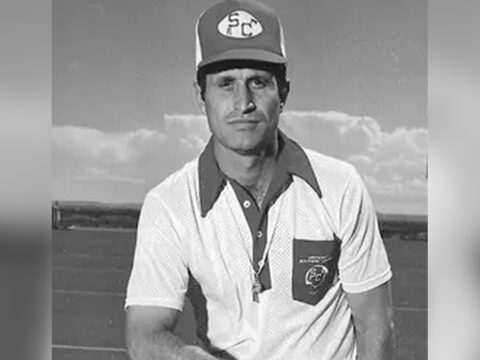
Andrew Ramage Obituary: Ithaca, NY Cornell Archaeology Professor Dies at 87
Andrew Ramage, 87, a Cornell professor emeritus of art history and archaeology known for discoveries at Sardis, died November 2 in Ithaca, New York.

Andrew Ramage was central to ancient art and archaeology at Cornell for many decades, a scholar of ancient coinage, Lydian architecture, and Roman art whose students followed him into the field in Turkey summer after summer. The professor emeritus in the Department of History of Art and Visual Studies in Cornell’s College of Arts and Sciences died on Sunday, November 2, 2026, in Ithaca, New York. He was 87.
Ramage was born in London in 1939. He earned a bachelor’s degree in classics and classical archaeology in 1961 at Cambridge University. After moving to the United States to teach Latin and English at Windham College in Putney, Vermont, he earned his Ph.D. in classical archaeology from Harvard University in 1970. He joined the Cornell faculty as an assistant professor in 1972, was promoted to associate professor in 1978 and to full professor in 1985, and retired in 2007. Colleagues remembered his modesty, his sense of humor, and his dedication to his students.
Ramage spent a significant amount of time in the field, working with the Harvard-Cornell Sardis Excavations, in the capital of the ancient Lydian Empire in modern Turkey, from 1965 until 2019. He became assistant field director in 1971 and associate director in 1977. At Cornell, he was chair of what was then called the Department of the History of Art and Archaeology for two terms and directed the archaeology program for three terms. He brought many of his students to work as excavators at Sardis.
Discoveries at Sardis, decades in the classroom
Among Ramage’s major discoveries was finding that what was thought to be a natural hill was actually the monumental city wall that surrounded Sardis. Excavation revealed that the wall, made of mud brick, was 60 feet thick and sloped to ward off enemies. He also discovered a sixth-century B.C.E. gold refinery, the oldest known refinery and a major contribution to understanding metallurgy in the time of Croesus, King of Lydia. He made these contributions in a quiet and unassuming way, often in partnership with his wife, Nancy H. Ramage, of Ithaca College. Together they published articles and several books, including the textbook Roman Art: Romulus to Constantine, first issued in 1991.
Ramage is survived by his wife, as well as two children, Joan Ramage Macdonald and Michael H. Ramage, and six granddaughters. The Andrew Ramage Memorial Scholarship Fund has been established in his memory at the Turkish Philanthropy Fund to support Turkish students in Turkey. MacPherson Funeral Home in Newark Valley, New York, is handling arrangements.
Andrew Ramage was 87. He was a husband, a father, and a teacher whose discoveries at Sardis reshaped what scholars know about the ancient world. Rest in peace, Andrew Ramage.

Hense Todd
Hense Todd covers the NFL Draft and college scouting for Chiefs Blitz. From Senior Bowl standouts to late-round sleepers, he tracks the prospects who could become the next Chiefs stars.