‘You Are Not Responsible for Saving Them’: NYC Teacher’s 4-Minute Talk on Setting Boundaries Ignites Teachers vs. Parents War Over Who Owes Kids What
An NYC bilingual elementary teacher's 4-minute TikTok on setting boundaries — "you are not responsible for saving them" — has teachers and parents at war.
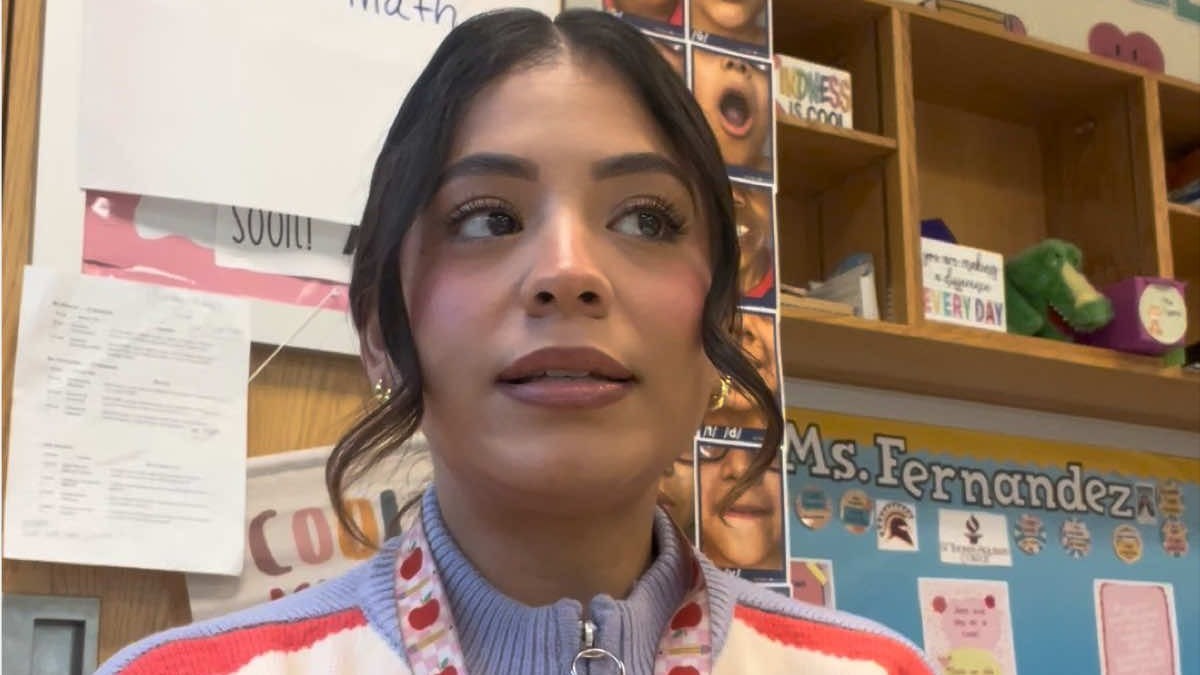
Nobody signs up to be a teacher expecting an easy job — but few people outside the classroom understand how much of the job has nothing to do with teaching at all. A 29-year-old bilingual elementary school teacher in New York City finally said the quiet part out loud, and in four minutes flat, she started one of the biggest teacher-vs-parent fights TikTok has seen in months.
Carol, who posts as @.carolgiselle, uploaded the video on October 7 after followers kept asking how she manages to have everything together. Her answer was not a planner hack. It was a boundary line. She described how she survived nine years in the classroom by learning to detach: clock in, give her students her full hundred percent, then clock out and pour back into herself — because a teacher who takes care of herself teaches better too.
The part that lit the match was her blunt framing of where a teacher’s job ends. In her caption, she writes that it is beautiful to make a difference in students’ lives — but a teacher is there to support, lead, and show up, not to be a savior. “It’s not our responsibility to save the world,” she writes. “It is our responsibility to show up for it.” She adds that parents also carry a responsibility to support their own child — and that was the sentence thousands of people could not scroll past.
The 236-second video spread fast: more than 300,000 plays and over 40,000 likes, with the comment section turning into a battleground. On one side: teachers who say she told the truth they have been afraid to say. On the other: parents who heard something very different in her words.
tiktok.com/@.carolgiselle/video/7693727696630...
Teachers say: we are drowning, and boundaries are survival
The teachers who flooded her comments see a mirror. Teaching is one of the few jobs where emotional labor is not just part of the work — it is the work. Teachers absorb their students’ hunger, grief, and chaos at home every day, often long after the bell rings. For many, she said what they feel: you cannot pour from an empty cup, and martyring yourself for the profession does not make you a better educator.
The burnout argument has real weight behind it. Teacher attrition has been climbing for years, with exhaustion among the top reasons educators quit. Carol is not describing a teacher who checked out — she describes one who gives everything inside the classroom and refuses to let the job consume the person underneath. To her supporters, that is not selfishness. It is the only way to last.
Parents say: our kids need more than clock-in care
But parents hear the same video and flinch. School is where many children spend most of their waking hours, and for kids dealing with poverty or unstable homes, a teacher is sometimes the only steady adult in the room. When a teacher says out loud that children are not her responsibility to save, some parents hear permission to do less — not a healthy boundary, but a retreat.
Parents also feel the sting of her message that they need to step up. Many are already stretched thin by work and bills, and being told they are not doing enough by the system they pay taxes to support feels like blame. Their counter is simple and sincere: we trusted you with our children, and now you are telling us you clock out emotionally at 3 p.m.? Both sides, in their own way, feel unseen.
What makes the video impossible to dismiss is that neither side is exactly wrong. Teachers really are burning out, and boundaries really are what keep good ones in the profession. And parents really do have every right to expect that the adults shaping their children’s days care about more than the clock. The fight in her comments is not about one teacher in New York — it is about a system where teachers are asked to be social workers and counselors too, while parents are asked to do a second job at home, and everyone feels like they are failing.